
Lufthansa Technik remains on track after a strong third quarter
Revenue increases to 6.8 billion euros in the first nine months, Adjusted EBIT improves to 515 million euros despite ongoing challenges
New customer contracts, higher investments, and further progress in implementing the Ambition 2030 strategy strengthen market position
Performance improvement initiatives and disciplined cost management support positive business development
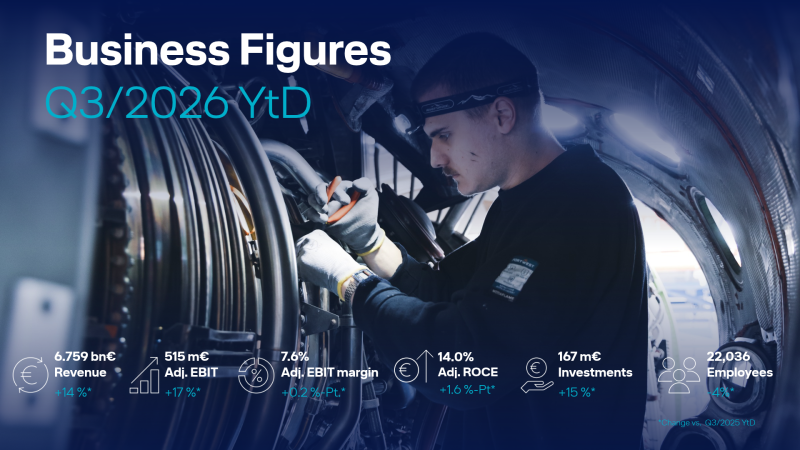
Following a strong third quarter, Lufthansa Technik remains firmly on track for the full year. Despite continued challenges arising from material shortages, supply chain delays, and geopolitical uncertainties, the company improved both revenue and earnings compared with the previous year. Revenue for the first nine months increased by 14 percent year-on-year to 6.8 billion euros, while Adjusted EBIT rose by 17 percent to 515 million euros. Consequently, the Adjusted EBIT margin improved to 7.6 percent (previous year: 7.4 percent). External customer business accounted for 79 percent of total revenue (previous year: 74 percent), underlining Lufthansa Technik’s strong market position as the world’s leading provider of technical aircraft services for the aviation industry. Investments also increased by 15 percent to 167 million euros during the reporting period (previous year: 145 million euros), reflecting the consistent execution of the company’s growth and performance strategy, Ambition 2030.
“We delivered a strong result after the first nine months of the year. We remain on track, even though the market environment continues to require a high degree of discipline and flexibility,” said Dr. Christian Leifeld, Chief Financial Officer of Lufthansa Technik. “Our priority remains profitable growth, and that guides our investment decisions. We strengthened key customer relationships and advanced our strategic growth initiatives, resulting in significant improvements in both revenue and earnings. At the same time, the ongoing effects of geopolitical uncertainties and the currently subdued outlook among our airline customers remain important factors influencing our business. We are addressing these challenges through disciplined cost management, operational excellence, and a clear prioritization of our resources.”
Following the noticeable decline in flight hours in the second quarter due to of the Middle East crisis, business development recovered somewhat during the reporting period as a result of seasonal effects. However, flight-hour volumes remained slightly below the level recorded in the third quarter of 2025. Growth was driven primarily by engine maintenance and non-flight-hour-based component services.
Strategic initiatives and sustainable investments advance growth as planned
During the reporting period, Lufthansa Technik continued the consistent implementation of its Ambition 2030 strategy. A key milestone was the signing of a new 15-year exclusive agreement with Canada’s Flair Airlines covering engine and digital services for the carrier’s LEAP-1B-powered Boeing 737 MAX 8 fleet. The contract supports the continued ramp-up of Lufthansa Technik Canada’s maintenance operations in Calgary, which specialize in LEAP-1B engine services, and further strengthens Lufthansa Technik's position in this growth market.
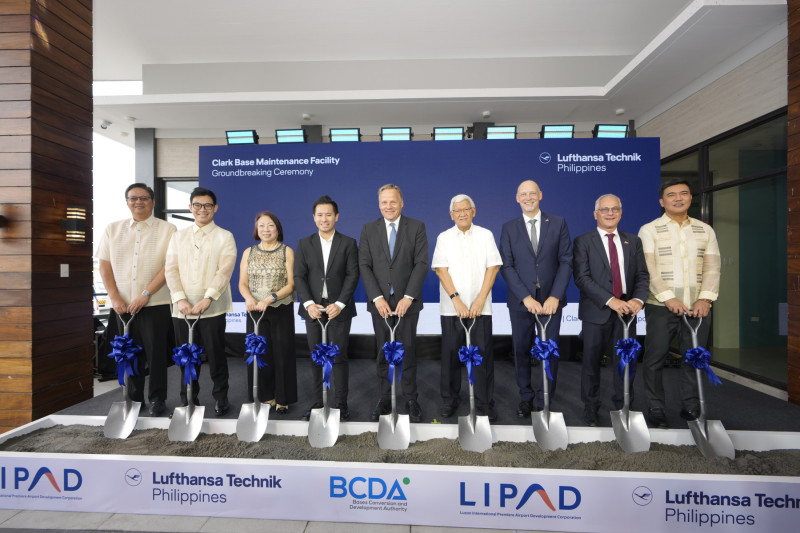
Further progress was made in expanding the global network. In August, Lufthansa Technik started construction of a second aircraft overhaul facility in the Philippines at Clark International Airport. It is scheduled to enter service in 2028 and will expand widebody aircraft base maintenance capacities in the Asia-Pacific region. Emirates is expected to become the first customer for the new site. During the reporting period, the cooperation with the airline was further strengthened through an extension of the agreement covering base maintenance support for its Airbus A380 fleet until 2030.
Long-term customer partnerships and stable demand strengthen market position
Among the most significant commercial achievements were the extension of the Total Component Support agreement with Japan Airlines for its Boeing 787 fleet, as well as a long-term contract with Uzbekistan Airways for comprehensive component services covering its Boeing 787 and Airbus A320ceo/neo fleets.
Lufthansa Technik also achieved important milestones in expanding its defense services portfolio. Together with Boeing, the company agreed on the general contractual framework for future maintenance support of the German Armed Forces’ new CH-47F Chinook heavy-lift helicopters. In addition, Lufthansa Technical Training has been certified as a DEMAR-147 training organization by the German Military Aviation Authority, enabling the subsidiary to train technical personnel for military aircraft types.
Stable outlook despite a challenging market environment
“For the full year, we continue to expect earnings to develop significantly above the previous year’s level. This performance is supported by overall global demand, our broad business portfolio, long-term customer agreements, and the progress of our growth and performance initiatives,” said Dr. Christian Leifeld.
As of 30 September 2026, the company employed 22,036 people, four percent fewer than in the previous year. At the same time, Lufthansa Technik welcomed 287 new apprentices and dual students, continuing its investment in workforce development to meet growing customer demand over the long term.
Downloads




About Lufthansa Technik:
The Lufthansa Technik Group is one of the leading providers of technical aircraft services in the world. Certified internationally as a maintenance, production and design organization, the company employs more than 22,000 people in locations around the globe. Lufthansa Technik offers the full range of services for commercial, VIP and special mission aircraft. The portfolio includes maintenance, repair, overhaul and modification of airframes, engines, components and landing gears, as well as the manufacture of innovative cabin products and digital fleet support.